Outline
- Key takeaways and why this ending matters
- Who SI-VIS are in-universe and how the song functions
- Lyric-by-lyric reading and thematic beats
- Musical arrangement and emotional architecture
- Visual symbolism tied to the ending sequence
- How this example fits into wider conversations on anime themes explained
- Practical listening tips and fan-facing ideas
- Frequently asked questions
Key takeaways
Anime themes explained often reveal more than a catchy melody. The ending "Singing Over" by SI-VIS compresses worldbuilding, character voice, and emotional release into a minute and a half. It uses repetitive vocal hooks and a bright melodic line to signal hope, persistence, and a dual identity: performers who are also protectors. The result is an ending theme that installs mood, teases plot, and invites repeat listens long after a single episode ends.
Why this ending matters in a landscape of anime themes explained
Ending themes frequently offer emotional closure, and this specific ending demonstrates how endings act as a bridge between episode tone and ongoing narrative. In discussions of Anime themes explained, endings are often the unsung workhorses: they translate complex story beats into a compact musical statement. "Singing Over" does that by leaning on repetition—both lyrically and melodically—to build recognition and to convert a live-concert conceit into an emotional payoff.
Anatomy of an ending: purpose and placement
Endings are not filler. When considering Anime themes explained, it helps to remember three roles an ending usually plays: mood closure, character perspective, and narrative foreshadowing. This ending supplies all three. The repeated vocal motif—particles of "me" and "ni" and the phrase "Sing about forever"—works as character shorthand, quickly signposting the group’s mindset: relentless, performance-driven, and oddly tender.
Who SI-VIS are and why that matters to anime themes explained
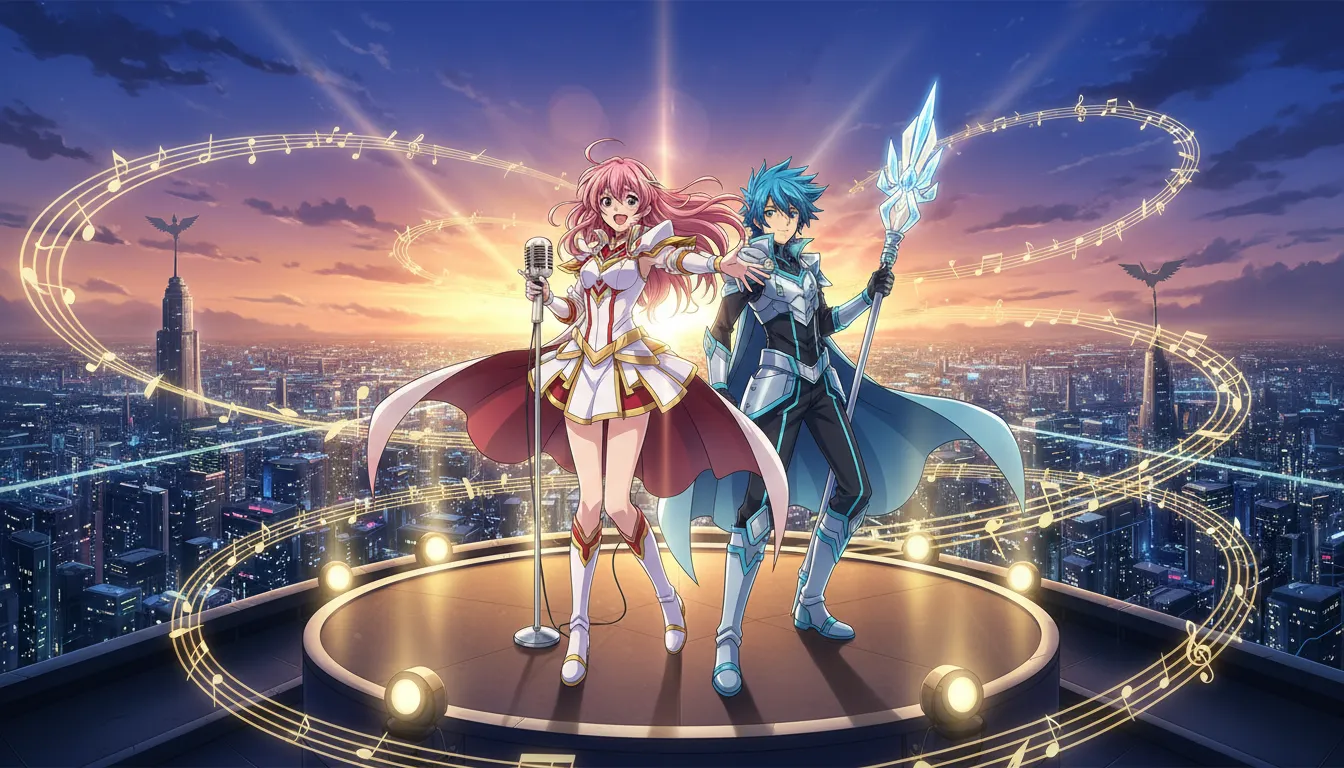
SI-VIS is a co-ed music group whose performances double as battles. That premise turns every song into a source of literal power. Within the framework of Anime themes explained, this is a neat meta trick: a theme song about singing that actually stands in for the power at play on-screen. The ending's compact lyrics and buoyant melody feel like an encore after a show that paid off emotionally and narratively.
The dual identity: performers and heroes
It is one thing to sing about forever; it is another to convert audience energy into combat power. The ending theme emphasizes that duality without spelling out every detail. For readers focused on Anime themes explained, this is a classic example of how music bridges the gap between spectacle and intimacy.
Lyric-by-lyric reading (short but dense)
Despite its brevity, the lyrics of "Singing Over" are deliberately spare. Sparse lyrics can be a feature, not a flaw, for those studying Anime themes explained. Each repeated syllable and short line creates rhythm and emphasis.
Opening repetitions: "me" and "ni"
The song begins with repeated syllables—"me" then "ni"—that function like a heartbeat. In discussions of Anime themes explained, these syllabic hooks often act as auditory logos. The voice becomes an instrument that announces identity without lexical meaning. It is a way of saying more through less.
"さあ息もつかずに響かせ"
This line translates roughly to a rush: "now let it ring without taking a breath." That breathless instruction mirrors live performance intensity and, when placed in conversations about Anime themes explained, demonstrates how endings mimic the energy of the central conceit. It suggests urgency, a refusal to pause, and a commitment to one continuous arc of action or feeling.
"僕の私の夢運動で"
Combining pronouns and the word for dream and motion, this fragment hints at inclusive ownership—"my, our dream in motion." For people interested in Anime themes explained, lines like this underline themes of collective effort and the transformation of wish into action. The ambiguity—mixing masculine and neutral pronouns—also fits the group's co-ed identity, offering a subtle nod to plurality.
"Sing about forever" and the closing "ラララ"
The English line "Sing about forever" functions as a distillation of intent: a commitment to endurance. In the context of Anime themes explained, such a line reframes the series' stakes as emotional longevity—protecting a future user through music. The "ラララ" coda is pure ear candy, an uncomplicated emotional release that keeps the tone buoyant as the credits roll.
Musical arrangement and emotional architecture
From an arrangement perspective, the song is compact and strategic. That economy of sound is worth highlighting when studying Anime themes explained. Few elements are needed: a vocal lead, layered backing vocals, light percussion, a rhythmic bassline, and sparkling synths to heighten the sense of uplift.
Why simplicity works
When examining Anime themes explained, simple arrangements often win because television schedules demand memorability. This ending follows that rule. The production favors clarity over complexity, ensuring that the hook lodges in the listener’s memory. Simplicity also enhances replay value; listeners are more likely to loop a short, catchy ending than a sprawling arrangement.
Vocal layering and group identity
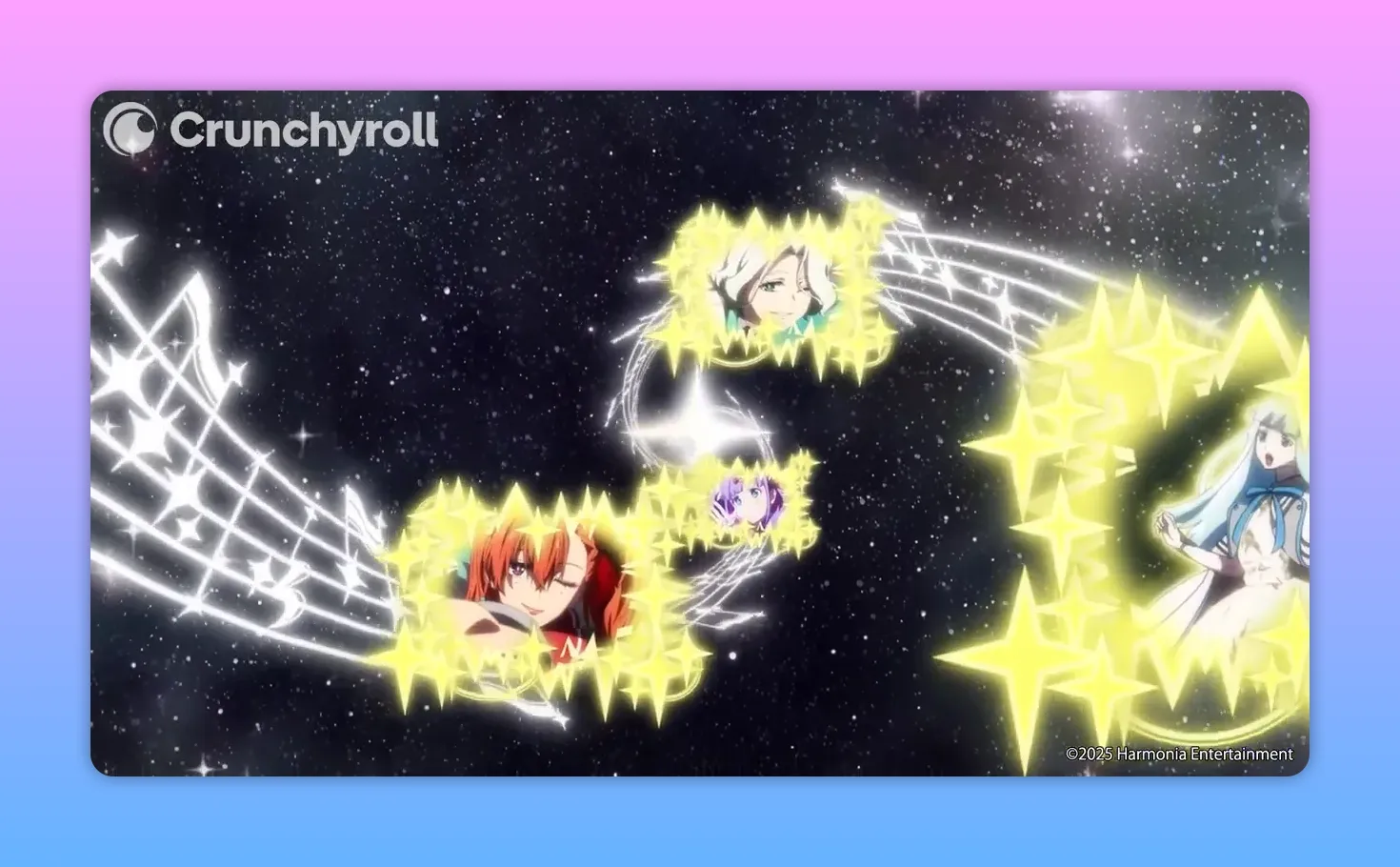
Vocal stacking—placing multiple voices in harmony—does more than add texture. In terms of Anime themes explained, harmonies symbolize unity. SI-VIS’s harmonies suggest that the group’s strength derives from cooperation. The arrangement treats individual voices as pieces of a whole, which mirrors the plot mechanism of converting crowd energy into power.
Visual symbolism in the ending sequence
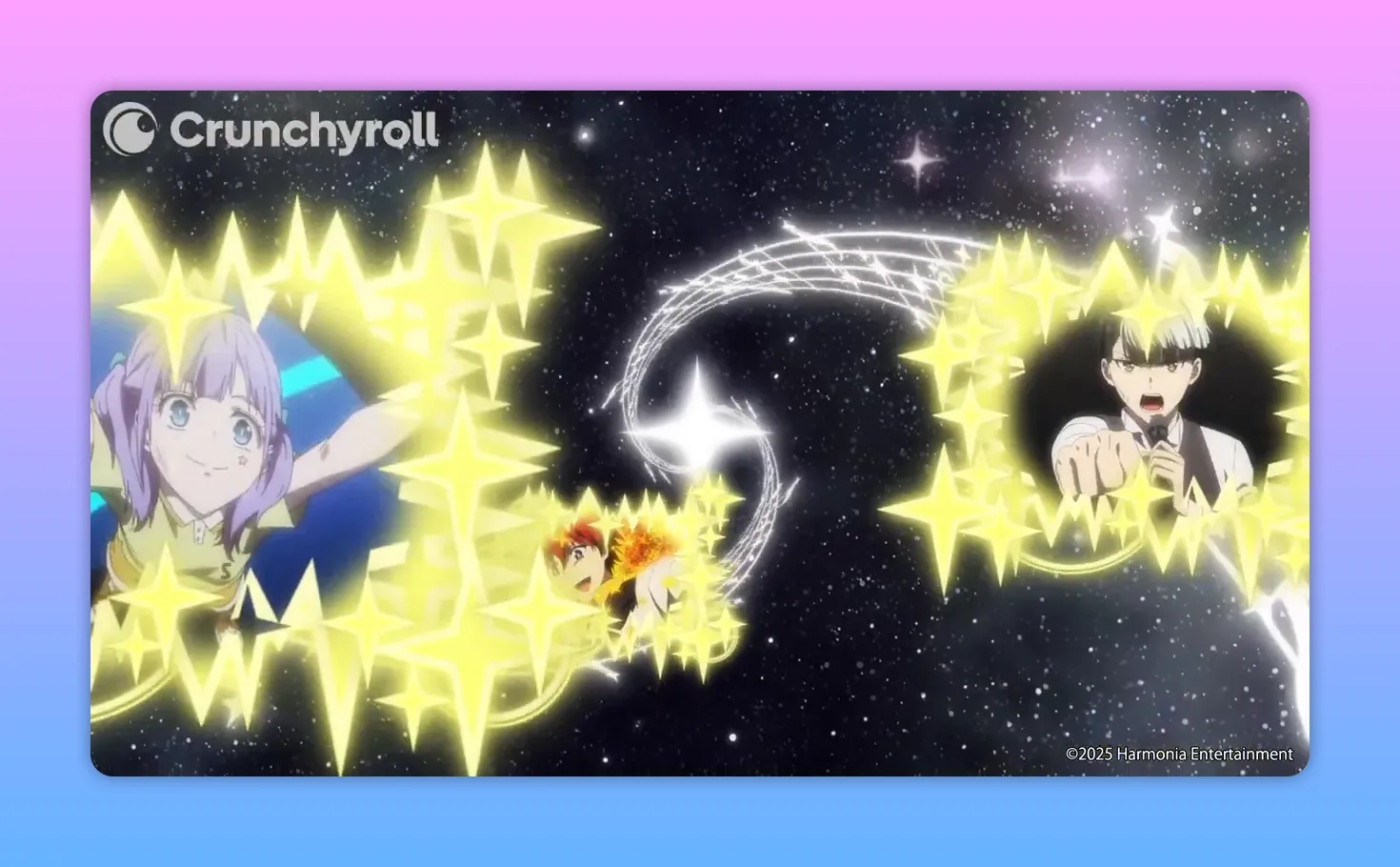
Endings combine music and imagery to leave a lasting mood. In the context of Anime themes explained, visuals play a crucial role in expanding lyrical meaning. The sequence that accompanies "Singing Over" typically intersperses performance shots with symbolic motifs. These visual choices reinforce ideas about identity, secrecy, and transformation.
Performance as camouflage
Visuals show the band performing in staged, glittering settings. For critics of Anime themes explained, this is a clever narrative device: the spectacle functions as both entertainment and disguise. The camera often lingers on smiles and synchronized choreography, implying that what looks like a concert is actually strategic movement in an ongoing struggle. The ending makes that duality feel natural.
Close-ups and human detail
Close-up shots focus on breath, on lips forming the syllables "me" and "ni," and on hands gripping microphones. Those details, essential when studying Anime themes explained, remind the audience that even larger-than-life figures are human. The intimacy balances the spectacle, grounding the music in bodily effort and emotional stakes.
How endings like this function within the series
When exploring Anime themes explained, it helps to see the ending as part of the story engine. It reinforces characters' missions, offers tonal counterpoints to the episode's content, and sometimes pushes subtext into the open. "Singing Over" aligns with these functions by amplifying hope and concealing danger within melody.
Pacing and mood transition
Endings guide emotional pacing. After intense scenes, a bright ending can relieve tension; after lighter episodes, it can add layers that viewers might not have registered. For those studying Anime themes explained, "Singing Over" provides catharsis without softening the series' stakes. It preserves tension while celebrating resilience.
Long-term narrative hooks
Repetition breeds familiarity. In the long arc, hearing the same ending ties disparate episodes together. From a Anime themes explained perspective, recurring melodies function as mnemonic devices: they cue memory and emotion, making narrative callbacks more effective because the music already primes the audience.
Fan interpretations and what they can learn from anime themes explained
Fans often form elaborate readings from tiny lyrical fragments. With Anime themes explained in mind, that practice is useful: the most resilient themes invite multiple interpretations. The song's brevity and repetition become interpretive openings rather than limitations.
Common readings
- Performance as protection: The song is an act of defense, not just celebration.
- Collective dreams: The pronoun ambiguity invites shared ownership of aspiration.
- Breathless urgency: The "no-breath" line suggests a moment of brave, unswerving commitment.
Each reading is a valid contribution to the broader conversation around Anime themes explained. Fans add layers simply by listening closely and by connecting sound to story.
How this ending sits among memorable anime themes explained
In lists of notable ending songs, "Singing Over" might not be the most complex composition, but it demonstrates efficiency. For scholars and fans cataloging Anime themes explained, effectiveness matters more than complexity. The ending does exactly what it needs to: it stamps a feeling into the viewer’s memory and reinforces the narrative mechanics of a show where music literally matters.
What makes an ending memorable
- Immediate emotional clarity
- Melodic hook that repeats without growing stale
- Visual coherence between lyrics and imagery
- Connection to character and plot
This ending checks those boxes, which is why it is a solid case study in Anime themes explained.
Practical listening and appreciating tips
Understanding Anime themes explained becomes easier with active listening practices. Try these focused habits when approaching short endings like "Singing Over."
- Listen once for feeling: Don’t try to parse words; note how the song changes your mood.
- Listen again for words: Translate lines and consider how each fragment relates to the plot.
- Watch the sequence muted: Observe visuals without music to see what the imagery wants to convey.
- Then combine: Put music and image back together to notice how each amplifies the other.
These steps help anyone seeking practical examples of Anime themes explained to build a sharper taste and a more intentional listening practice.
How composers and directors use endings as narrative tools
Directors and composers collaborate to place motifs that serve the larger story. When studying Anime themes explained, it is instructive to note how small musical cues reappear in episode scores, or how lyrical fragments echo character lines. The ending's compact structure makes it a portable motif: it can be stretched into a battle theme or remixed into a quiet interlude depending on the scene’s needs.
Recycling motifs
A single melodic cell from an ending can become a leitmotif across episodes. That technique is a hallmark of advanced Anime themes explained: recycling melody helps unify disparate narrative moments and rewards attentive audiences with emotional recognition.
Practical ideas for fans and creators inspired by anime themes explained
When a theme song works, it invites participation. Here are creative directions inspired by studying Anime themes explained through "Singing Over."
- Create a short cover focusing on the repeated syllables. Stripping the song back reveals the hook.
- Make a mood playlist that pairs the ending with scenes from other shows that use breathless energy.
- Sketch a storyboard imagining an extended ending that explores the group's private lives between performances.
- Write a short piece about audience energy as an actual resource, inspired by the song’s premise.
Each activity is a hands-on way to deepen understanding of Anime themes explained and to explore the creative possibilities of ending music.
How to talk about endings without being reductive
Discussions of Anime themes explained risk reducing songs to "good" or "bad." A more constructive approach treats endings as cultural artifacts: they reflect production constraints, marketing goals, and narrative choices. "Singing Over" succeeds because it aligns production values with story needs, not because it aims to be a standalone pop hit.
Final thoughts on this kind of storytelling
Compact endings like "Singing Over" are powerful because they do a lot with very little. For anyone tracing patterns in Anime themes explained, the value is in noticing economy: how a short sequence can amplify mood, reveal character, and reinforce plot mechanics. These are the principles that make anime themes worth studying and enjoying.
Frequently asked questions
What role do ending themes play compared to opening themes?
Endings often serve emotional closure and reflection, while openings tend to set tone and ramp adrenaline. In studies of Anime themes explained, endings are recognized for their ability to distill an episode’s emotional residue into a melodic form that lingers after the narrative pause.
Why are lyrics sometimes so minimal in anime endings?
Minimal lyrics improve memorability and allow music to function as mood scaffolding. Across many examples in Anime themes explained, repetition and syllabic hooks make a piece easy to recall and sing along to, strengthening its role as a narrative anchor.
How can viewers learn to analyze anime themes themselves?
Begin with focused listening: note mood, lyrical fragments, and how visuals interact. Compare the ending with episode themes and recurring motifs. Practicing these steps builds fluency in Anime themes explained and makes future analyses more intuitive.
Do endings influence character perception?
Yes. Endings can emphasize traits like resilience or vulnerability by choosing specific musical colors and imagery. When studying Anime themes explained, observe how vocal timbre and visual focus highlight different facets of character.
Can an ending song be detached from the show and still work?
Some endings function as pop songs independent of their shows; others gain power only in context. For the purposes of Anime themes explained, both reactions are informative: a standalone hit shows commercial potential, while a context-dependent song underscores tight narrative integration.
Further listening and next steps
For those practicing Anime themes explained, catalog a few short endings and compare how they resolve episode emotions. Notice arrangements that prioritize vocal hooks, and identify ways visuals either reinforce or complicate lyrical meaning. The deeper the catalog, the richer the comparative insights.
Parting note
Endings like "Singing Over" are small studies in efficiency. They prove that a brief song and its matching visuals can carry narrative weight, make characters feel more real, and create a ritual for viewers to return to. For anyone engaged in Anime themes explained, the lesson is clear: pay attention to endings. They say more than they look like they can.
This article was created from the video SI-VIS: The Sound of Heroes Ending 2 | "Singing Over" with the help of AI.
Anime themes explained: SI-VIS — "Singing Over" (The Sound of Heroes Ending 2). There are any Anime themes explained: SI-VIS — "Singing Over" (The Sound of Heroes Ending 2) in here.
Sponsor

